


Shop
Filter by brand
 AFRICELL BRANDAFRICELL BRAND 102
 AKT BRANDAKT BRAND 100
 BICODI BRANDBICODI BRAND 100
 Canadian Solar BrandCanadian Solar Brand 101
 COLA BRANDCOLA BRAND 100
 CWORTH ENERGY BRANDCWORTH ENERGY BRAND 99
 Deye BrandDeye Brand 100
 DP BRANDDP BRAND 94
 ECOFLOW BRANDECOFLOW BRAND 98
- EMIRATES BRAND 100
 Felicity BrandFelicity Brand 124
 GENUS BRANDGENUS BRAND 100
 Growatt BrandGrowatt Brand 102
 HAISIC BRANDHAISIC BRAND 97
 Itel Energy BrandItel Energy Brand 104
 JA SOLAR BRANDJA SOLAR BRAND 100
 JINKO SOLAR BRANDJINKO SOLAR BRAND 100
 LONGI SOLAR BRANDLONGI SOLAR BRAND 101
 LUMINOUS BRANDLUMINOUS BRAND 93
 Lutian brandLutian brand 100
 LVTOPSUN BRANDLVTOPSUN BRAND 100
 MUST BRANDMUST BRAND 30
- SAKO BRAND 99
 SMS SUNMATE BRANDSMS SUNMATE BRAND 100
 SOLIS BRANDSOLIS BRAND 100
 SRNE BRANDSRNE BRAND 97
 SU KAM BRANDSU KAM BRAND 98
 SUKHIG BRANDSUKHIG BRAND 99
 Sun King BrandSun King Brand 98
 TRINA BRANDTRINA BRAND 98
 WAKATEK BRANDWAKATEK BRAND 98
 YOHAKO BRANDYOHAKO BRAND 101

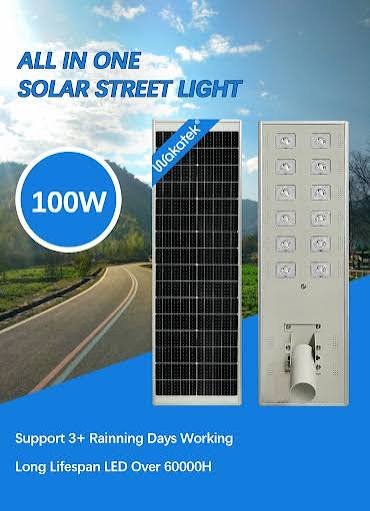
WAKATEK 12-Eye 100W Solar Street Light multi-eye LED
Original price was: ₦260,000.00.₦250,000.00Current price is: ₦250,000.00.Features and Buying Guide
Benefits of a 12-Eye Solar Street Light
The WAKATEK 12-eye solar light offers a solar-powered option for outdoor lighting projects. Its multi-eye LED design distinguishes it from conventional single-panel lighting layouts. The advertised 100W rating also helps identify the product when comparing models in a solar street light catalogue.
Solar lighting may help reduce grid electricity use at the installation point. In addition, it can be useful in areas where running electrical cables is inconvenient. However, the overall performance depends on sunlight availability, battery storage, solar panel capacity, and the selected lighting mode.
When choosing a solar street light, consider the intended use rather than relying only on its appearance or wattage. For example, a private driveway may have different lighting needs from a long road or a commercial parking area. Comparing verified specifications helps you make a more suitable choice.
Installation and Maintenance Tips
Choose an installation point that receives sufficient sunlight throughout the day. Nearby trees, walls, and buildings can shade the solar panel, so check the location before mounting the light. Next, ensure that the pole and mounting hardware meet the manufacturer’s requirements.
Regular maintenance can help keep the unit in good condition. Clean the solar panel when dust or dirt builds up on its surface. Also, inspect the mounting hardware and look for visible damage. Follow the manufacturer’s guidance when cleaning or servicing the product.
If the model includes automatic lighting controls or a remote control, review the supplied instructions before use. Confirm the recommended mounting angle and operating settings as well. Proper installation can support effective solar charging, although actual lighting duration will still depend on the system specifications and weather conditions.
What to Check Before Purchasing
Before ordering the WAKATEK 12-Eye 100W Solar Street Light, request the datasheet for the exact model. Confirm the actual LED power, luminous output, solar panel wattage, battery type and capacity, charging time, and expected operating hours. These details provide a clearer picture of the product’s capabilities.
You should also verify the water-resistance rating, recommended installation height, warranty period, and availability of replacement parts. If you plan to install multiple lights, consider the area each unit can cover and the spacing needed between poles.
Finally, confirm which accessories come with the product and whether installation support is available. Do not assume specific battery capacities, charging times, or waterproof ratings unless the supplier confirms them. With accurate specifications, you can decide whether this multi-eye solar street light meets your outdoor lighting requirements.
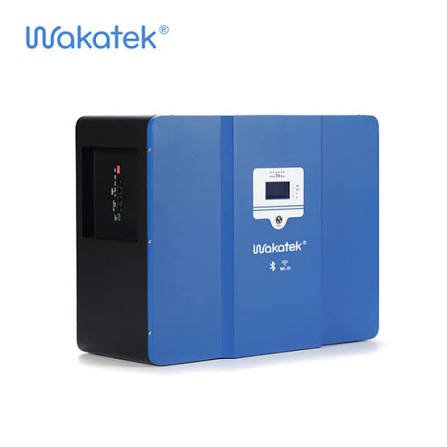
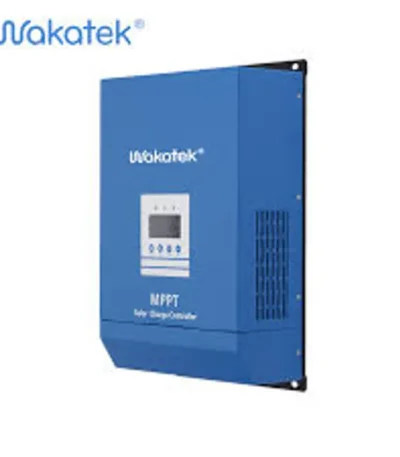
WAKATEK 120A MPPT Solar Charge Controller
Original price was: ₦321,000.00.₦320,000.00Current price is: ₦320,000.00.120A MPPT Solar Charge Controller for Off-Grid Systems
Make Better Use of Solar Energy
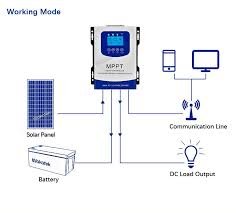
A solar charge controller helps manage the electricity flowing from solar panels to a battery. The 120A MPPT Solar Charge Controller may be suitable for compatible solar installations that require a high-current charging solution. Its suitability depends on the electrical requirements and verified specifications of the exact model.
MPPT technology tracks the solar panels’ maximum power point to help capture available solar power under changing conditions. This can support effective energy conversion in a properly designed system. However, actual performance depends on sunlight, panel arrangement, battery voltage, and controller specifications.
The advertised 120A rating is an important factor when selecting a controller. Nevertheless, it does not determine the maximum solar panel capacity or the amount of energy a battery can store. You must also check the maximum PV input voltage, permitted panel power, and supported battery voltage.
Start by estimating your daily electricity consumption. Identify the appliances you want to operate and calculate their expected energy use. Then choose compatible solar panels and battery storage. This approach helps you design a system around your actual energy requirements.
Check Compatibility and Charging Settings
Compatibility is essential for reliable operation. First, confirm the battery voltage supported by the controller. Next, check that its charging settings match the battery manufacturer’s recommendations.
Different battery chemistries can require different charging profiles. Therefore, verify which battery types the exact model supports. Do not assume that every MPPT controller works with all lead-acid and lithium batteries.
Solar panel configuration also matters. Review the panels’ open-circuit voltage, operating voltage, and combined power output. Ensure that the complete array stays within the controller’s specified electrical limits. Incorrect wiring or excessive input voltage can damage equipment.
The manufacturer’s website lists a fan-cooled MPPT controller range that includes 60A, 80A, and 120A models. However, the exact specifications for the 120A version should be confirmed with the supplier. <Cite refs={[“turn776180search1″,”turn776180search2”]}/>
Before purchasing, request the official datasheet and verify the model number, maximum PV input voltage, supported battery types, charging-current rating, and permitted solar panel power. Also, review the warranty and available protection features.
Build a Reliable Solar Charging Setup
A complete solar installation requires compatible panels, a suitable battery, a charge controller, and correctly rated electrical connections. Depending on the system design, additional protective equipment may also be necessary.
Before installation, read the product manual and follow the specified wiring sequence. Use suitable cables, connectors, fuses, and isolation devices according to the manufacturer’s instructions. If you are unsure about the electrical design, consult a qualified solar installer.
The installation environment matters as well. Follow the manufacturer’s guidance for mounting, ventilation, temperature, and moisture protection. If the model includes a cooling fan, keep its air openings clear and follow the recommended maintenance instructions.
Inspect electrical connections periodically and address any visible damage or unusual operating behaviour. For better system planning, compare expected daily energy use with available solar generation and usable battery capacity.
With compatible components and correct installation, an MPPT controller can form part of a practical solar energy system. Verify the exact model specifications before ordering to ensure that it matches your intended application.
WAKATEK 12V 100Ah LiFePO4 Battery lithium battery
Original price was: ₦251,000.00.₦250,000.00Current price is: ₦250,000.00.12V 100Ah Lithium Battery for Solar Energy Storage
Store Energy for Later Use
A 12V 100Ah LiFePO4 lithium battery can be considered for energy storage applications that require a compatible low-voltage battery system. It offers a stated capacity of 100Ah, which provides a starting point for evaluating your power requirements.
However, the actual energy available to your appliances depends on the battery’s confirmed specifications. Usable capacity, discharge limits, operating conditions, and system losses can affect performance. Therefore, check the manufacturer’s datasheet before estimating runtime.
Start by identifying the devices you want to power. Consider their power consumption and the number of hours they must operate. Add the energy requirements together to estimate your total demand. Then compare that estimate with the battery’s verified usable energy.
For appliances that use AC electricity, you may need a compatible inverter. The inverter converts the battery’s DC power into AC power for supported devices. However, conversion losses reduce the energy delivered to appliances. You should also check whether the inverter can handle the combined load and any startup surge.
This planning process helps you avoid choosing a battery that is too small for your requirements. It also helps you prioritise essential equipment when stored energy is limited.
Explore Different Power Applications
Solar storage is one possible use for a compatible lithium battery. During daylight hours, solar panels can generate electricity for household or other approved loads. A suitable charging system can direct available energy into the battery for later use.
When solar production decreases, stored energy may support selected appliances. The actual benefit depends on sunlight, system configuration, battery charge level, and electricity consumption. A battery does not create energy, so the charging source must provide enough electricity to meet your expected usage.
The battery may also be considered for backup systems where its voltage and current ratings match the equipment. For example, a properly designed setup may support selected lighting or communication devices during a power interruption. Nevertheless, backup operation requires compatible equipment and suitable installation arrangements.
Before using the battery for any application, confirm that the intended equipment is supported. Check the required voltage, current, and operating conditions. Do not connect high-demand appliances without verifying that the battery and the complete system can handle their requirements.
When comparing battery options, consider the charging requirements, usable capacity, warranty, and supplier support. These factors are important alongside the capacity stated in the product title.
Maintain Correct Charging and Safe Operation
Correct charging helps support reliable battery operation. Use a charger or solar charge controller approved for the exact LiFePO4 model. Follow the manufacturer’s charging voltage and current limits rather than relying on general settings for other batteries.
Temperature is another important consideration. Check the permitted charging, discharging, and storage temperature ranges. These limits can differ between products, so confirm them before installation.
Inspect the battery and its connections according to the manufacturer’s instructions. Use suitable cables and electrical protection, and keep the installation within the specified operating conditions. Never assume that a battery management system, if fitted, replaces proper installation or external electrical protection.
Before connecting multiple batteries, confirm whether series or parallel connections are permitted for the exact model. Follow the specified configuration and use compatible units as directed by the manufacturer.
Finally, request documentation confirming the battery’s capacity, voltage range, charging limits, discharge ratings, protection features, dimensions, and warranty. This information helps you select compatible equipment and plan a practical energy storage system.
With appropriate charging equipment and a well-designed setup, a 12V 100Ah LiFePO4 battery may be a useful option for compatible solar and backup applications. Verify the specifications before purchasing to ensure the product matches your actual needs.
WAKATEK 12V 50Ah LiFePO4 Battery lithium battery
Original price was: ₦121,000.00.₦120,000.00Current price is: ₦120,000.00.12V 50Ah Lithium Battery for Flexible Power Storage
Manage Stored Energy More Effectively
A 12V 50Ah lithium battery can be an option for users who need rechargeable energy storage in a compatible power system. It may suit selected applications where the battery’s voltage, capacity, and discharge limits meet the equipment requirements.
The stated 50Ah rating helps you compare battery capacity with your expected energy needs. However, the actual energy available to connected devices depends on the exact battery specifications. Do not assume that all products with the same voltage and capacity have identical performance.
Start by listing the equipment you want to operate. Check each device’s power consumption and expected operating hours. Then estimate the total energy required. This simple process helps you decide whether a 50Ah battery is suitable or whether a different capacity would be more appropriate.
For equipment that uses alternating current (AC), you may also need a compatible inverter. Inverter losses reduce the energy delivered to appliances, so include them when estimating runtime. In addition, check the inverter’s startup requirements if it powers equipment with motors or other demanding loads.
Explore Practical Energy Storage Uses
Solar energy storage is one possible application for a compatible LiFePO4 battery. During periods of solar generation, a suitable charging system can direct available electricity into the battery. The stored energy may then be used when solar production decreases, provided the battery and other system components support the intended setup.
A battery may also support selected backup loads. For instance, a carefully planned system could supply compatible lighting or communication equipment during a power interruption. Nevertheless, backup performance depends on the available stored energy and the total connected load. The battery alone does not guarantee uninterrupted power or a particular runtime.
Portable power is another possible application when the battery’s design, dimensions, and installation requirements suit the intended use. Before connecting equipment, confirm its operating voltage and current demand. Also, check whether the battery is approved for that type of application.
When comparing batteries, consider more than the capacity printed on the product label. Review the charging requirements, discharge limits, protection features, warranty, and supplier support. These details can help you compare similar products more accurately.
Follow Safe Charging and Maintenance Practices
Correct charging is important for lithium battery performance. Use a charger or solar charge controller that supports the exact battery chemistry and follows the manufacturer’s specified charging profile. Avoid using unverified settings or exceeding the permitted charging current.
The battery’s operating temperature also matters. Check the manufacturer’s limits for charging, discharging, and storage. Some lithium batteries have different temperature restrictions for charging and discharging, so confirm these details before installation.
Inspect the battery and its connections according to the manufacturer’s guidance. Keep terminals secure and use appropriate electrical protection. Do not use a battery that shows signs of damage, swelling, leakage, or unusual heating. If a problem occurs, disconnect the system only when it is safe to do so and seek qualified assistance.
Before ordering, request the official datasheet for the exact model. Confirm the rated and usable capacity, voltage range, maximum current, BMS features, dimensions, and warranty terms. These checks help prevent compatibility problems and support informed purchasing decisions.
With a suitable charging system and correctly matched equipment, a 12V 50Ah LiFePO4 battery may provide a practical energy storage option. Choose the battery according to your actual power needs rather than relying on capacity alone.
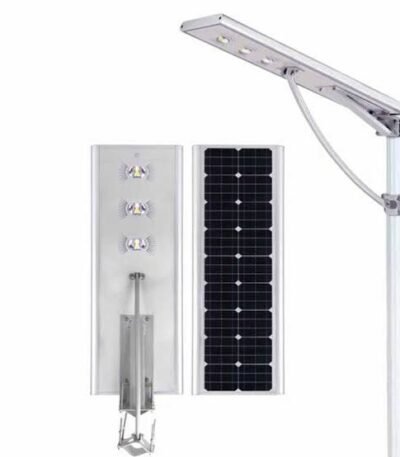
WAKATEK 16-Eye 120W Solar Street Light industrial grade
Original price was: ₦280,000.00.₦270,000.00Current price is: ₦270,000.00.Why Consider a 120W Industrial Solar Street Light?
The WAKATEK 16-Eye 120W Solar Street Light offers a solar-powered option for outdoor lighting projects. Its multi-eye LED design distinguishes it visually from other street light styles. It may be worth considering for industrial facilities, commercial properties, access roads, and other outdoor locations.
Solar-powered lighting can reduce dependence on grid electricity at the installation point. It may also simplify projects where running electrical cables is inconvenient. However, actual performance depends on sunlight availability, battery capacity, solar panel output, and the lighting mode.
For industrial applications, reliable planning is essential. Consider the size of the site, the hours of lighting required, and the level of visibility needed. Compare verified specifications before choosing this model for a specific area.
Installation and Maintenance Recommendations
Choose a mounting location that receives adequate sunlight throughout the day. Check for nearby trees, buildings, and other obstacles that could shade the solar panel. Next, ensure that the pole and mounting hardware meet the manufacturer’s installation requirements.
Routine maintenance can help keep the system in good condition. Clean dust and dirt from the solar panel when necessary. Inspect the mounting hardware periodically and check for visible damage. Follow the manufacturer’s guidance for cleaning, servicing, and any adjustments to the lighting system.
For industrial sites, consider the surrounding environment before installation. Dust, heavy rain, and other conditions may affect equipment performance. Confirm the product’s official water-resistance rating and operating temperature range rather than assuming that an industrial-style design guarantees a particular level of protection.
What to Check Before Purchasing
Before buying the WAKATEK 16-Eye 120W Solar Street Light, request a datasheet for the exact model. Confirm the actual LED power, lumen output, solar panel wattage, battery type and capacity, charging time, and expected operating hours.
Also, check the water-resistance rating, recommended mounting height, warranty period, and availability of replacement parts. If the light will be installed across a large site, review the proposed pole spacing and lighting coverage. These details can help you estimate how many units are required.
Finally, confirm which mounting accessories are included and whether installation support is available. Do not assume a specific battery capacity, charging time, or waterproof rating unless the supplier confirms it. By checking the technical details first, you can make a more informed choice for your industrial or commercial lighting project.
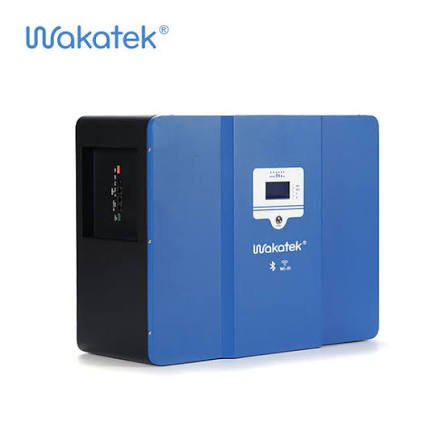
WAKATEK 20A MPPT Solar Charge Controller
Original price was: ₦55,100.00.₦55,000.00Current price is: ₦55,000.00.20A MPPT Solar Charge Controller for Off-Grid Systems
Make Better Use of Solar Energy
A solar charge controller helps regulate charging from solar panels to a battery. The 20A MPPT Solar Charge Controller may be suitable for an off-grid solar installation when its electrical specifications match the rest of the system.
MPPT technology tracks the solar panels’ operating point to help obtain available power as sunlight and operating conditions change. This can be useful when planning a system that needs to convert solar energy into battery charging power. However, the benefits depend on the panel arrangement, controller design, and operating conditions.
The controller should be selected according to your complete solar setup. Consider the battery voltage, solar panel output, charging requirements, and expected energy consumption. Also, check the controller’s maximum input voltage and permitted solar panel power before connecting any equipment.
A well-planned system can help you use solar electricity for suitable household or off-grid applications. Nevertheless, the controller does not store energy itself. The battery capacity and connected equipment determine how much energy can be stored and used later.
Check Electrical Ratings and Battery Support
Compatibility is essential when choosing a 20A MPPT Solar Charge Controller. First, confirm that the controller supports your battery’s nominal voltage. Then, check its charging profile and ensure that it matches the battery manufacturer’s recommendations.
Battery chemistry matters because different batteries have different charging requirements. Some controllers support multiple battery types, while others have more limited options. Verify the supported battery types for this exact model rather than assuming compatibility.
You should also check the maximum solar input voltage and current limits. The combined solar panel arrangement must remain within the controller’s specifications, including the panel voltage under relevant conditions. An unsuitable configuration can damage the controller or other system components.
The manufacturer’s published range includes MPPT controllers, including a listed 40A/60A model. However, I could not verify an official specification sheet for this exact 20A model. Ask the supplier to confirm the model number and provide the correct datasheet before relying on any detailed technical specifications.
Build a Practical Solar Installation
A reliable solar charging system requires compatible panels, a suitable battery, a charge controller, and correctly rated electrical connections. Depending on the installation, additional protective equipment may also be necessary.
Before installation, read the user manual carefully. Follow the specified connection sequence and use suitable cables, terminals, and protective devices. If you are unfamiliar with solar electrical systems, consult a qualified installer.
Consider the controller’s installation environment as well. Check the manufacturer’s requirements for temperature, ventilation, moisture protection, and mounting. Keep the equipment accessible for inspection and routine maintenance.
After installation, monitor the system according to the manufacturer’s instructions. Check the connections periodically and investigate any unexpected charging behaviour. Do not change battery charging settings without confirming the correct values.
Before ordering, verify the maximum PV voltage, supported battery types, system voltage, charging-current rating, and maximum solar panel power. Careful planning helps ensure that the controller is appropriate for your intended application and works within its specified limits.

WAKATEK 20A PWM Solar Charge Controller 12/24V
Original price was: ₦15,200.00.₦15,000.00Current price is: ₦15,000.00.WAKATEK 20A PWM Solar Charge Controller 12/24V
Manage Solar Battery Charging
A 20A PWM Solar Charge Controller helps regulate the charging process between compatible solar panels and a battery. It is designed for solar systems that use a supported 12V or 24V battery configuration. This type of controller can help manage charging and reduce the risk of battery overcharging when used correctly.
PWM stands for Pulse Width Modulation. This charging technology regulates the connection between the solar panel and battery to control the charging process. It is commonly used in smaller solar installations where a suitable PWM controller meets the system’s requirements.
The advertised 20A rating indicates the controller’s nominal current rating. However, the correct solar panel configuration depends on the controller’s maximum input voltage and permitted solar power. Check the official specifications before connecting panels. Do not assume that every panel arrangement will work with this controller.
Support Compatible 12V and 24V Systems
A controller designed for 12V and 24V systems may offer flexibility when setting up a small solar installation. The correct system voltage must match the connected battery. If automatic voltage detection is supported, follow the manufacturer’s startup procedure to ensure the controller identifies the system correctly.
Before installation, confirm the supported battery chemistry and charging settings. Lead-acid batteries and lithium batteries can require different charging profiles. Never assume that every battery type is supported unless the manufacturer confirms it.
You should also check the controller’s maximum PV voltage, maximum charging current, and permitted panel power for each system voltage. These details help you choose compatible solar panels and avoid exceeding the unit’s electrical limits.
For a practical setup, calculate the expected solar output and compare it with the controller’s specifications. Consider the battery capacity and your daily energy requirements as well. A correctly matched controller can help maintain an appropriate charging process for the selected battery system.
Install the Controller Carefully
Correct installation is essential for reliable operation. Follow the manufacturer’s connection sequence and wiring diagram. Many solar controllers require the battery to be connected before the solar panels, but you should confirm the instructions for this exact model.
Use suitable cables and secure electrical connections. Incorrect polarity, loose terminals, or undersized wiring can cause damage or overheating. Place the controller in a location that meets the manufacturer’s ventilation and temperature requirements.
Before purchasing the WAKATEK 20A PWM Solar Charge Controller, request the official datasheet. Confirm the supported battery types, PV input limits, protection functions, and any display or load-control features. These details can vary between controller models.
With compatible components and correct installation, a PWM controller can form a useful part of a small solar charging system. Verify the specifications before connecting your panels and battery.
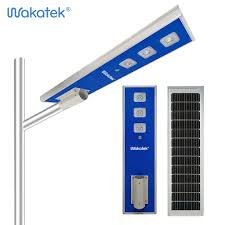
WAKATEK 20W Solar Street Light 2000 lumens
Original price was: ₦51,000.00.₦50,000.00Current price is: ₦50,000.00.Benefits of a 2000-Lumen Solar Street Light
The WAKATEK 20W solar light offers a solar-powered option for outdoor illumination. Its stated 2000-lumen output helps buyers compare its advertised brightness with other solar street lights. It may be suitable for locations that need practical lighting without a direct connection to grid electricity.
Solar lighting can be useful for outdoor spaces where running electrical cables is difficult. It may also help reduce electricity consumption for the lighting point. However, the actual benefit depends on the system’s efficiency, available sunlight, battery storage, and how long the light operates each night.
When comparing products, consider both wattage and lumen output. Wattage indicates power consumption, while lumens describe the amount of visible light produced. In addition, the beam pattern and mounting height affect how effectively the light illuminates the intended area.
Installation and Maintenance Tips
Choose a location where the solar panel receives sufficient direct sunlight during the day. Avoid placing it under trees or close to structures that cause long periods of shade. Follow the manufacturer’s instructions for mounting height, pole compatibility, and installation.
Regular maintenance can help keep the system in good condition. Clean dust and dirt from the solar panel when necessary. Also, inspect the mounting hardware periodically and check for visible damage. Follow the manufacturer’s guidance when cleaning or servicing the unit.
Weather conditions can affect solar charging and battery performance. For this reason, confirm the product’s official water-resistance rating before installing it in an exposed outdoor location. Do not assume that a specific waterproof rating or all-night operating time applies unless the supplier verifies it.
What to Check Before Purchasing
Before ordering the WAKATEK 20W Solar Street Light, confirm that the advertised 2000-lumen output applies to the exact model. Ask the supplier for the solar panel wattage, battery type and capacity, charging time, and expected operating duration.
You should also check the recommended mounting height, lighting coverage, warranty, and included accessories. If you plan to illuminate a pathway or driveway, consider the area that one unit can cover and whether additional lights are required.
Finally, review the installation instructions and availability of replacement parts. Comparing these details will help you choose a suitable solar lighting option for your property. With the product specifications confirmed, you can make a more informed purchase.
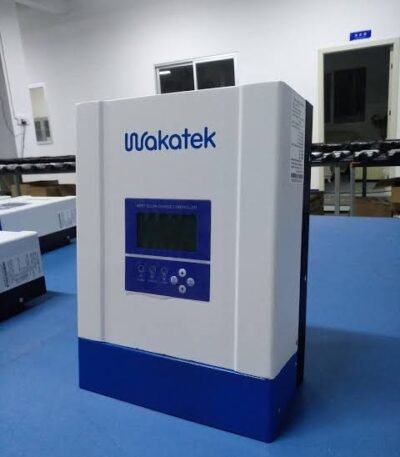
WAKATEK 24V 100Ah LiFePO4 Battery lithium battery
Original price was: ₦481,000.00.₦480,000.00Current price is: ₦480,000.00.A 100Ah Battery for Practical Energy Storage
The 24V LiFePO4 Battery offers an energy storage option for compatible solar power and backup systems. Its 100Ah capacity makes it worth considering for installations that need stored electricity for selected appliances and essential equipment.
Lithium iron phosphate technology is used in many modern energy storage products. It is valued for its stable chemistry and potential for a long service life. However, actual performance depends on the battery model, operating temperature, charging method, installation quality, and daily energy use.
Make Better Use of Solar Electricity
Solar panels generate electricity during daylight, but their output changes with sunlight, weather, and panel placement. A compatible battery can store some of this energy for use later. This can help support selected devices when solar production falls or grid power is unavailable.
To estimate backup time, list the appliances you want to operate and calculate their expected energy consumption. Lighting, routers, and small electronics may use less energy than pumps or other high-power equipment. The total load determines how quickly stored energy is used.
The battery must work with a compatible inverter or energy storage system. Check the equipment manual for voltage requirements, charging settings, output limits, and communication support. Do not assume every inverter supports every lithium battery. Ask a qualified installer to confirm compatibility before installation.
Safe Installation and Long-Term Performance
Choose an installation location that follows the manufacturer’s requirements. Keep the battery away from water, excessive heat, and conditions outside its approved operating range. Ensure that the mounting arrangement, wiring, and protective devices are suitable for the complete system.
Follow the specified charging and discharging limits. Use approved accessories, and avoid opening or modifying the unit. If the battery shows visible damage, unusual heating, or repeated faults, stop using it when safe and contact a qualified professional.
Before buying, check the verified dimensions, weight, warranty, cycle-life rating, charging current, and available protection features. A 24V and 100Ah rating suggests approximately 2.4kWh of nominal energy, although usable energy may be lower. Confirm the exact energy rating in the official product documentation.
The right setup depends on your appliances, backup requirements, and compatible equipment. Careful planning can help improve reliability, support efficient energy use, and make stored solar electricity more useful in everyday life.

WAKATEK 24V 200Ah LiFePO4 Battery lithium battery
Original price was: ₦851,000.00.₦850,000.00Current price is: ₦850,000.00.A 200Ah Battery for Practical Energy Storage
The 24V LiFePO4 Battery provides a storage option for compatible solar power and backup systems. Its 200Ah capacity makes it suitable for consideration in installations that need stored electricity for selected appliances and essential equipment.
Lithium iron phosphate technology is used in many modern energy storage products. It is valued for its stable chemistry and potential for a long service life. However, actual performance depends on the battery model, operating temperature, charging method, installation quality, and daily energy use.
Make Better Use of Solar Electricity
Solar panels generate electricity during daylight, but their output changes with sunlight, weather, and panel placement. A compatible battery can store some of this energy for use later. This can help support selected devices when solar production falls or grid power is unavailable.
To estimate backup time, list the appliances you want to operate and calculate their expected energy consumption. Lighting, routers, and small electronics may use less energy than pumps or other high-power equipment. The total load determines how quickly stored energy is used.
The battery must work with a compatible inverter or energy storage system. Check the equipment manual for voltage requirements, charging settings, output limits, and communication support. Do not assume every inverter supports every lithium battery. Ask a qualified installer to confirm compatibility before installation.
Safe Installation and Long-Term Performance
Choose an installation location that follows the manufacturer’s requirements. Keep the battery away from water, excessive heat, and conditions outside its approved operating range. Ensure that the mounting arrangement, wiring, and protective devices are suitable for the complete system.
Follow the specified charging and discharging limits. Use approved accessories, and avoid opening or modifying the unit. If the battery shows visible damage, unusual heating, or repeated faults, stop using it when safe and contact a qualified professional.
Before buying, check the verified dimensions, weight, warranty, cycle-life rating, charging current, and available protection features. A 24V and 200Ah rating suggests approximately 4.8kWh of nominal energy, although usable energy may be lower. Confirm the exact energy rating in the official product documentation.
The right setup depends on your appliances, backup requirements, and compatible equipment. Careful planning can help improve reliability, support efficient energy use, and make stored solar electricity more useful in everyday life.
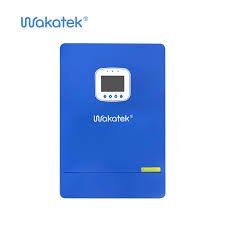
WAKATEK 3.5kVA Solar Generator 7.5kWh Lithium Battery
Original price was: ₦1,381,000.00.₦1,380,000.00Current price is: ₦1,380,000.00.Unmatched Solar Generator Output and Grid Freedom
Take full control over your property’s electrical supply with the WAKATEK Solar Generator 7.5kWh lithium battery setup. In remote locations or areas with frequent blackouts, standard power setups fail to meet basic energy demands. Fortunately, this high-performance Solar Generator acts as a primary energy hub for your property.
It processes high solar panel input voltages to run active home loads directly during daylight hours. Excess solar power charges your reliable 7.5kWh lithium battery bank for nighttime consumption. In short, this Solar Generator turns raw solar energy into dependable daily electricity.
Smart Load Optimization and Financial Savings
Reducing your total electrical utility bills becomes simple with this intelligent setup. The Solar Generator prioritizes renewable solar power over grid electricity whenever sunlight is available. During peak energy pricing hours, it uses stored battery energy to power your property appliances.
As a result, you avoid expensive electricity utility rates and reduce monthly operational expenses significantly. Furthermore, super-fast automatic transfer switches detect grid cuts in milliseconds. Desktop computers, internet routers, and security cameras stay active without rebooting during sudden power failures.
Heavy-Duty Construction for Long Service Life
Engineered for demanding environmental conditions, this Solar Generator features heavy-duty protective metal cabinets. The durable casing shields delicate internal electrical components from dust and physical wear. Advanced internal circuit layouts reduce heat dissipation, keeping power conversion efficiency exceptionally high.
Additionally, reverse-current protection prevents stored battery power from leaking out during dark nighttime hours. The ultra-quiet operation makes it ideal for residential installations. Investing in this Solar Generator guarantees reliable power backup and long-term operating performance.
Eco-Friendly Energy Transition Made Simple
Integrating this modern Solar Generator reduces your overall dependence on noisy, polluting fossil fuel generators. It delivers clean and silent renewable energy management, helping lower your property carbon footprint.
Accessible wiring terminals allow installers to connect solar array inputs and battery leads cleanly. Diagnostic indicators display immediate operational status at a single glance. Furthermore, its expandable setup options allow future energy system upgrades. Choosing the WAKATEK Solar Generator provides reliable, cost-effective, and sustainable electricity for years.
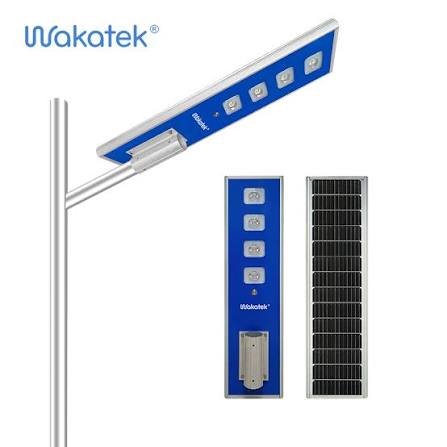
WAKATEK 300W Solar Flood Light aluminum housing
Original price was: ₦79,600.00.₦79,500.00Current price is: ₦79,500.00.A Practical Solar Flood Light Solution
The WAKATEK 300W solar flood light offers an option for outdoor spaces that need illumination without depending entirely on mains electricity. Its solar-powered design uses energy collected during daylight hours to support lighting after dark. This can be helpful for properties where conventional wiring requires additional work.
The aluminium housing is another feature to consider when comparing outdoor flood lights. A well-designed aluminium body can support heat dissipation and provide a sturdy enclosure for the lighting components. Nevertheless, long-term performance depends on the complete product design, material finish, and protection against environmental conditions.
Before choosing this model, consider how much light your area needs and how the fixture will be mounted. Wattage alone does not determine the illuminated area. Light output, beam angle, mounting height, and surrounding obstacles also affect the final result.
Suitable for Residential and Commercial Spaces
This solar flood light may be suitable for residential gardens, driveways, property entrances, parking spaces, and selected commercial outdoor areas. It may also be considered for workshops, storage yards, and other locations that need practical exterior lighting.
Solar lighting can offer flexibility in places where a direct electrical connection is inconvenient. Once correctly installed, the system uses stored solar energy according to its design and operating settings. However, lighting duration can change with weather, sunlight availability, battery condition, and usage patterns.
For better performance, install the solar panel in an open location with good sunlight exposure. Keep it away from shadows created by walls, trees, and roofs. Also, direct the flood light towards the intended area to minimise wasted illumination.
For large or safety-critical spaces, assess the required light coverage before installation. You may need additional fixtures to reduce dark areas. Reviewing your lighting needs in advance helps you select a more suitable setup.
Installation and Maintenance Considerations
Before ordering the WAKATEK 300W solar flood light, confirm the complete package contents and installation requirements. Ask the supplier about the mounting options, cable connections, charging instructions, and recommended installation position. Also, verify the battery specifications and expected lighting hours.
Regular care can help maintain the system. Keep the solar panel clean and remove dust or debris that could reduce sunlight exposure. Inspect the mounting hardware and visible connections periodically, following the manufacturer’s instructions. Avoid opening sealed electrical components unless the manufacturer or a qualified technician advises it.
You should also confirm the product’s weather-protection rating rather than relying on its housing material alone. Aluminium construction does not automatically guarantee waterproof performance. Ask for the exact model’s datasheet and warranty information before installation.
For more product information, visit the official WAKATEK solar lighting range. Confirm the specifications of your selected 300W model with the supplier so you can make an informed purchasing decision.